---
title: "HIT Perspectives NOV 2025: Top 5 In-EHR Function"
description: Discover five key In-EHR strategies life sciences companies should prioritize in 2026 to enhance provider engagement, compliance, and patient outcomes.
image: https://info.pocp.com/hubfs/20251112_0945_Medical%20Dashboard%20Illustration_remix_01k9w8bn4teq0bmm38h50f42a4.png
---
[](https://www.pocp.com/)
# Accelerating client's success
# using Health IT and
# business process solutions...
[Learn More](https://www.pocp.com/the-pocp-story/)
# Simplifying
# regulatory
## compliance...
[Learn More](https://www.pocp.com/regulatory-resource-center/)
# Creating value in today's
# healthcare ecosystem...
[Learn More](https://www.pocp.com/our-client/)
- Consulting
- [Strategy & Market Intelligence](https://www.pocp.com/strategy-market-intelligence/)
- [Education & Research](https://www.pocp.com/education-research/)
- [Value-Based Care Interoperability Roadmap](https://info.pocp.com/en-us/value-based-care-interoperability-strategy-and-roadmap)
- [Multi-stakeholder Collaboratives, Program Design and Management](https://www.pocp.com/multi-stakeholder-initiatives_program-design_management)
- [EHR Training Programs](https://www.pocp.com/ehr-training-programs/)
- [Life Sciences](https://www.pocp.com/life-sciences)
- [Regulatory Resource Center](https://www.pocp.com/regulatory-resource-center)
- About Us
- [The POCP Story](https://www.pocp.com/the-pocp-story/)
- [Our Clients](https://www.pocp.com/our-client/)
- [Health & IT Vendors](https://www.pocp.com/our-client/health-it-vendors/)
- [Payers & PBMS](https://www.pocp.com/our-client/payers-pbms/)
- [Accountable Care](https://www.pocp.com/our-client/accountable-care/)
- [Health Information Exchange](https://www.pocp.com/resource-library/health-information-exchange/)
- [Our Team](https://www.pocp.com/our-team/)
- [Government Contracting](https://info.pocp.com/gsa)
- [Press](https://www.pocp.com/press/)
- [Calendar](https://info.pocp.com/en-us/events)
- [Careers at POCP](https://www.pocp.com/the-pocp-story/careers-at-pocp/)
- Insights
- [Articles and Industry Comments](https://www.pocp.com/articles/)
- [Blog](https://blog.pocp.com/blog/)
- [Newsletters HIT Perspectives](https://www.pocp.com/insight/newsletters-2/)
- [Newsletters Biopharma](https://www.pocp.com/newsletters-biopharma/)
- [POCP Industry Reports](https://www.pocp.com/industry-reports)
- [POCP Industry Reports](https://www.pocp.com/industry-reports)
- [ePrior Authorization’s Real Benefits: Reducing Frictional Costs and Speeding Time to Therapy](https://www.pocp.com/downloads/ePAReport)
- [Real-Time Pharmacy Benefit Check Report](https://www.pocp.com/pocp-industry-reports/real-time-pharmacy-benefit-check-report/)
- [Fighting the Opioid Epidemic at the State- and Rx-Level Report](https://www.pocp.com/downloads/fighting-opioid-epidemic-at-rx-level-report)
- [ePrescribing State Law On-Demand](https://www.pocp.com/downloads/eprescribing-state-law-on-demand/)
- [State Law Review](https://www.pocp.com/statelawreview/)
- [Navigator](https://www.pocp.com/navigator/)
- [Podcasts](https://info.pocp.com/en-us/the-dish-on-health-it-podcast)
- [Presentations and Webinars](https://www.pocp.com/presentations/)
- [Resource Library](https://www.pocp.com/resource-library/)
- [White Papers, Webinars and Case Studies](https://www.pocp.com/white-papers-webinars-and-case-studies-2/)
- [Our video channel](https://www.pocp.com/our-video-channel)
- [Contact](https://www.pocp.com/contact/)
- Consulting
- [Strategy & Market Intelligence](https://www.pocp.com/strategy-market-intelligence/)
- [Education & Research](https://www.pocp.com/education-research/)
- [Value-Based Care Interoperability Roadmap](https://info.pocp.com/en-us/value-based-care-interoperability-strategy-and-roadmap)
- [Multi-stakeholder Collaboratives, Program Design and Management](https://www.pocp.com/multi-stakeholder-initiatives_program-design_management)
- [EHR Training Programs](https://www.pocp.com/ehr-training-programs/)
- [Life Sciences](https://www.pocp.com/life-sciences)
- [Regulatory Resource Center](https://www.pocp.com/regulatory-resource-center)
- About Us
- [The POCP Story](https://www.pocp.com/the-pocp-story/)
- [Our Clients](https://www.pocp.com/our-client/)
- [Health & IT Vendors](https://www.pocp.com/our-client/health-it-vendors/)
- [Payers & PBMS](https://www.pocp.com/our-client/payers-pbms/)
- [Accountable Care](https://www.pocp.com/our-client/accountable-care/)
- [Health Information Exchange](https://www.pocp.com/resource-library/health-information-exchange/)
- [Our Team](https://www.pocp.com/our-team/)
- [Government Contracting](https://info.pocp.com/gsa)
- [Press](https://www.pocp.com/press/)
- [Calendar](https://info.pocp.com/en-us/events)
- [Careers at POCP](https://www.pocp.com/the-pocp-story/careers-at-pocp/)
- Insights
- [Articles and Industry Comments](https://www.pocp.com/articles/)
- [Blog](https://blog.pocp.com/blog/)
- [Newsletters HIT Perspectives](https://www.pocp.com/insight/newsletters-2/)
- [Newsletters Biopharma](https://www.pocp.com/newsletters-biopharma/)
- [POCP Industry Reports](https://www.pocp.com/industry-reports)
- [POCP Industry Reports](https://www.pocp.com/industry-reports)
- [ePrior Authorization’s Real Benefits: Reducing Frictional Costs and Speeding Time to Therapy](https://www.pocp.com/downloads/ePAReport)
- [Real-Time Pharmacy Benefit Check Report](https://www.pocp.com/pocp-industry-reports/real-time-pharmacy-benefit-check-report/)
- [Fighting the Opioid Epidemic at the State- and Rx-Level Report](https://www.pocp.com/downloads/fighting-opioid-epidemic-at-rx-level-report)
- [ePrescribing State Law On-Demand](https://www.pocp.com/downloads/eprescribing-state-law-on-demand/)
- [State Law Review](https://www.pocp.com/statelawreview/)
- [Navigator](https://www.pocp.com/navigator/)
- [Podcasts](https://info.pocp.com/en-us/the-dish-on-health-it-podcast)
- [Presentations and Webinars](https://www.pocp.com/presentations/)
- [Resource Library](https://www.pocp.com/resource-library/)
- [White Papers, Webinars and Case Studies](https://www.pocp.com/white-papers-webinars-and-case-studies-2/)
- [Our video channel](https://www.pocp.com/our-video-channel)
- [Contact](https://www.pocp.com/contact/)
# Optimizing Health IT. For Good
Point-of-Care Partners delivers deep expertise through a 360-degree perspective to help organizations navigate complexity and drive meaningful progress.
# HIT Perspectives
This is a search field with an auto-suggest feature attached.
- There are no suggestions because the search field is empty.
### Subscribe
#### HIT Perspectives – November 2025
# Top Five In-EHR Functions Life Sciences Should Focus On in 2026
[](https://www.linkedin.com/in/vcandelora/) *By [Brian Bamberger](https://www.linkedin.com/in/bamberger/), General Manager, Life Sciences Business Unit*
### Quick Summary
- The EHR has evolved from an administrative tool to the **central hub of clinical care, decision support, and patient engagement.**
- For life sciences companies, EHRs are now **the most important digital environment for supporting providers and patients** in compliant, meaningful ways.
- **Dashboards are becoming powerful collaboration tools** that help providers track adherence, measure performance, and improve outcomes.
- Embedded **clinical calculators turn complex data into actionable insights,** supporting evidence-based, value-driven care.
- **In-EHR messaging can be a powerful educational tool**—if it’s precise, relevant, and non-intrusive.
- **Discussing EHR readiness during PIE ensures smooth product launches** and provider adoption.
- **Upskilling account teams** to speak confidently about EHR functionality **strengthens credibility and provider trust**.
- In 2026, success **will depend** less on flashy digital tools and more **on embedding clinical relevance, credibility, and workflow integration** into every interaction.
The electronic health record (EHR) has become the central hub of modern clinical practice. It houses patients’ clinical data, treatment orders, and documentation that guide care decisions. It is also where analysis takes place, enabling earlier intervention, monitoring treatment response, tracking adherence, and supporting administrative processes for reimbursement. For life sciences companies, the EHR represents the most important digital environment for influencing provider behavior and supporting patients in meaningful, compliant ways.
In the past, EHRs were often viewed as administrative tools or “necessary evils” of modern medicine. That perception has shifted. Today’s EHRs integrate useful reminders, patient engagement tools, and population health analytics. These systems now help clinicians make faster, more accurate decisions and coordinate care across increasingly complex health ecosystems.
For life sciences organizations, this evolution presents a tremendous opportunity. The ability to assist providers in developing clinical insights, key patient measures, and educational content directly into provider workflows can help ensure clinicians have timely, accurate information that improves patient outcomes. It also comes with the responsibility to operate in a manner that supports care without disrupting it.
The year ahead will be one in which precision, credibility, and workflow relevance matter more than ever. Here are the top five EHR functions on which life sciences companies should focus in 2026, with additional detail available in our previously published analyses and blogs.
## 1. Clinical Dashboards for Performance Measurement
Clinical dashboards have evolved into powerful tools for measuring performance, transforming raw data into organized, visual insights that can guide care at a glance. For providers, dashboards make it possible to assess population health trends, identify high-risk patients, and monitor adherence or disease progression without toggling between multiple systems.
For life sciences manufacturers, dashboards present an opportunity to collaborate with providers and health systems in ways that enhance care delivery. A well-designed dashboard can highlight key clinical indicators for a specific disease state, measure adherence to guidelines-based treatment options, monitor patients on a complex therapy, or show how patients are responding to different therapies. When grounded in real-world data and aligned with current evidence, these dashboards can help close care gaps and improve patient outcomes.
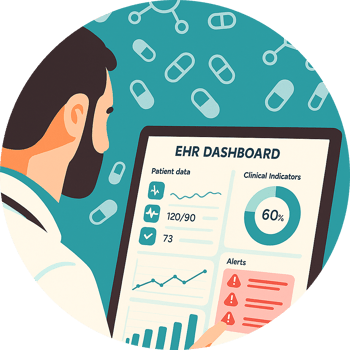In 2026, assisting customers in designing their dashboards to measure patient evaluations in comparison to guidelines and/or monitor and track patients on complex therapies will present a significant opportunity. Dashboards have moved beyond static visualizations toward interactive ones, where providers and their support teams can take direct action to close patient care gaps. Life sciences teams that understand how to align their value stories with these capabilities will be able to support providers in new ways. The goal should be to help clinicians make faster and better-informed decisions, not to add another layer of complexity or perceived bias.
The most effective collaborations will prioritize clinical credibility and transparency. Dashboards that clearly cite evidence sources, use unbiased data, and integrate seamlessly into the provider’s workflow are more likely to be trusted and used.
## 2. Clinical Calculators and Tools
Clinical calculators are an underappreciated but essential part of modern clinical workflows. They allow providers to translate complex clinical data into meaningful results that can help guide treatment. From scoring disease severity to calculating medication dosages or identifying candidates for advanced therapies, these tools make decision making faster and more consistent.
Life sciences manufacturers can play a valuable role by helping ensure that the right calculators are available and easily accessible within the EHR. A well-placed calculator can guide clinicians toward evidence-based treatment pathways or identify patients who meet specific clinical criteria. For example, a cardiovascular risk calculator embedded in an EHR can alert a provider to an elevated score and prompt discussion about new or optimized therapies. Just because a measure is available in an EHR does not mean that people have turned it on or use it regularly.
The key is not to promote a specific product but to offer clinically useful tools that support objective decision-making. This requires close collaboration with EHR vendors, informaticists, and health systems to design tools that are trusted and easy to use.
As the healthcare system moves further into value-based care and outcomes-based contracting, calculators will take on greater importance. They provide a data-driven foundation for identifying appropriate therapy candidates and tracking progress over time. For brand teams, investing in these kinds of EHR-embedded tools can strengthen credibility with providers and support better patient outcomes across the board.
## 3. In-EHR Messaging and Alerts
In-EHR messaging and alerts are among the most direct ways to reach clinicians at the point of care. When executed well, they can serve as a digital extension of medical affairs or field teams by delivering timely, relevant information to support clinical decision-making. However, these capabilities must be used with care and precision to avoid alert fatigue or the perception of marketing interference in clinical workflows.
In 2026, the landscape for EHR-based messaging will continue to evolve as regulatory scrutiny around content, frequency, and intent grows stronger. Providers are already inundated with digital notifications. To stand out, messages must be contextual, useful, and nondisruptive. The best performing EHR messages are those that:
- Appear when a provider is working within a relevant patient context.
- Offer concise, clinically credible information.
- Link to trusted references, guidelines, or support tools rather than promotional materials.
- Respect provider preference settings and information delivery boundaries.
Our research has shown that messages aligned with care team roles and workflow timing are far more effective than broad, one-size-fits-all alerts. The future of in-EHR messaging lies in personalization and relevance, supported by accurate data on provider specialties, patient panels, and clinical patterns.
For life sciences teams, this means moving beyond mass digital tactics toward precision engagement strategies that respect both compliance requirements and provider autonomy. Those who get this balance right will find EHR messaging to be one of the most powerful tools for education and behavioral change at the point of care.
## 4. Discussing EHR Readiness Prior to Drug Approval
In recent years, preapproval information exchange (PIE) has become an increasingly valuable practice for preparing the market ahead of a product launch. It allows manufacturers to share key data about a therapy before approval to help payers and providers plan appropriately. Yet one critical element is often overlooked: EHR readiness.
Too often, a product reaches approval and coverage milestones, only for providers to discover they cannot easily order or document it in their EHR. This delay can derail launch momentum and frustrate clinicians who are eager to treat patients with the new therapy. For complex therapies, considerable planning is needed to determine patient flow within the organization. Drug use may not move forward until operational issues are resolved and appear in the EHR.
Including EHR readiness discussions allows provider organizations to plan workflow configurations that are ready to go on day one. This might include planning therapy plans, ordering testing, enabling structured data fields for outcomes tracking, or creating clear guidance for information technology teams to follow once a drug is approved.
Regulatory guidance has made it clear that manufacturers can share this type of operational information during PIE activities provided it is factual, non-promotional, and intended to support appropriate system preparation. By integrating EHR readiness into their preapproval strategies, manufacturers can accelerate uptake, reduce frustration among providers, and demonstrate a higher level of partnership with the healthcare community.
In 2026, proactive EHR readiness will no longer be a differentiator; it will be an expectation. Those who prepare early will see smoother launches and faster integration into clinical workflows.
## 5. Upskilling Account Teams for EHR-Driven Discussions
Even with the best EHR tools and strategies in place, success ultimately depends on whether field and account teams can discuss EHR functionality knowledgeably and confidently. The sophistication of modern EHR systems means that many customer conversations now extend beyond the clinical and into the technical.
In 2026, life sciences organizations should make EHR fluency a standard part of account team development. This includes:
- **Education materials** that clearly explain how EHRs support workflow, clinical documentation, and decision-making for the therapeutic areas the brand serves.
- **Regular training** to keep account teams up to date on the evolving EHR landscape, including new interoperability requirements, clinical decision-support capabilities, and data integration opportunities.
- **Access to expert support**, such as an internal help desk or dedicated EHR liaison who can answer technical questions from the field.
Point-of-Care Partners’ clients who leverage our help desk services find that these resources strengthen field confidence and improve customer relationships. When account teams can explain how EHR tools align with provider goals, they shift the dialogue from selling to problem-solving.
Upskilling field teams also ensures that insights from the field flow back to headquarters. Understanding how customers use EHRs can help inform brand strategies, improve collaboration with vendors, and shape the next generation of digital enablement tools.
## Final Thoughts: Relevance Over Shiny Objects
The top five areas outlined here are not about chasing the latest technology or creating flashy digital tools. They are about embedding relevance into clinical workflows in ways that matter to providers and patients.
Each brand should take a step back and examine its overall goals, then ask a simple but strategic question: How can EHR tools and capabilities help achieve those goals while maintaining compliance, improving patient outcomes, and supporting provider efficiency?
Life sciences companies that invest in this kind of alignment will not only meet providers where they work but also position themselves as trusted partners in advancing care.
If your brand team is ready to explore how EHR capabilities can support your strategic objectives in 2026, [**contact me**](https://www.pocp.com/contact/) to schedule a consultation. Our experts can help you identify the most effective ways to integrate EHR tools, enhance your field team’s confidence, and ensure that your brand is optimized for success within the digital front door of healthcare.
**Past Blogs & Articles**
- [**Surfacing Clinical Calculators in the EHR and Applications at the Point of Care**](https://blog.pocp.com/blog/surfacing-clinical-calculators-in-the-ehr-and-applications-at-the-point-of-care?hsLang=en)
- [**Clinical Calculators in Healthcare: A Practical Primer for Life Sciences Manufacturers**](https://blog.pocp.com/blog/clinical-calculators-in-healthcare-a-practical-primer-for-life-sciences-manufacturers?hsLang=en)
- [**Are You Including EHR Preparation in Your PIE Resources? You Should Be**](https://blog.pocp.com/blog/are-you-including-ehr-preparation-in-your-pie-resources-you-should-be?hsLang=en)
- [**Pre-Approval Information Exchange (PIE): Clarifying Legislation Creates Opportunities to Accelerate Product Launches**](https://blog.pocp.com/blog/pre-approval-information-exchange-pie-clarifying-legislation-creates-opportunities-to-accelerate-product-launches?hsLang=en)
- [HIT Perspectives – Navigating the Challenges of In-EHR Messaging](https://info.pocp.com/hit-perspectives-aug-2025-in-ehr-messaging?hsLang=en)
---
[](https://www.pocp.com)
©2026 Point-of-Care Partners | All Rights Reserved
- [](https://twitter.com/pocpHIT)
- [](http://www.linkedin.com/company/point-of-care-partners)
- [](https://www.pocp.com/pocp-blog/)